
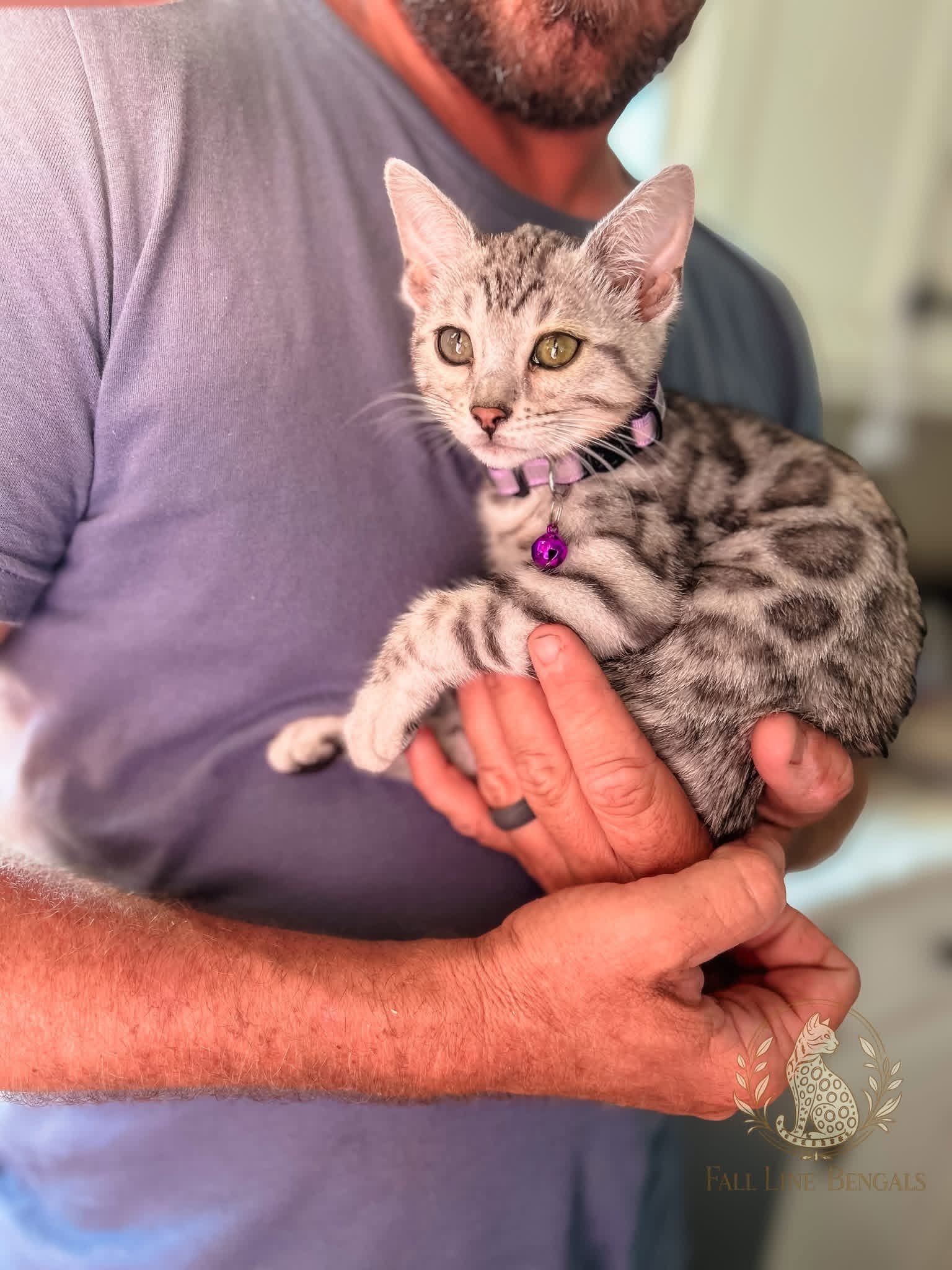
The Breed
The Bengal Cat
A living work of art — the wild beauty of a leopard in the heart of your home.
Origin & History
Born from the Wild
The Bengal breed was developed in the 1960s and 70s by geneticist Dr. Jean Mill, who crossed domestic cats with the Asian Leopard Cat (Prionailurus bengalensis) — a small, wild feline native to South and Southeast Asia.
The goal was never to create a wild pet, but to capture the breathtaking coat of a wild cat in a fully domestic, gentle companion. After several generations of selective breeding, the Bengal emerged: a cat with the look of the jungle and the temperament of a devoted family pet.
TICA recognized the Bengal as an official breed in 1983. Today, Bengals are one of the most popular breeds in the world — prized for their intelligence, athleticism, and unmatched beauty.

Temperament
Not Your Average Cat
Bengals are unlike any other domestic breed. They are interactive, opinionated, and endlessly entertaining — but they are not for everyone.
Athletic & Energetic
Bengals are built to move. They are muscular, agile, and love to climb, leap, and explore. A Bengal without enrichment is a Bengal looking for trouble — in the best possible way.
Deeply Bonded
Unlike many cats, Bengals form strong attachments to their people. They follow you room to room, greet you at the door, and want to be part of whatever you are doing.
Wildly Intelligent
Bengals solve puzzles, learn tricks, open doors, and figure out routines faster than you expect. They need mental stimulation as much as physical exercise.
Fascinated by Water
A trait inherited from their Asian Leopard Cat ancestry — many Bengals will play in water bowls, join you in the shower, or fish toys out of a running faucet.
The Coat
Patterns & Colors
The Bengal coat is its most defining feature — a short, dense, pelt-like texture that catches light in a way no other domestic cat can match.
Rosetted
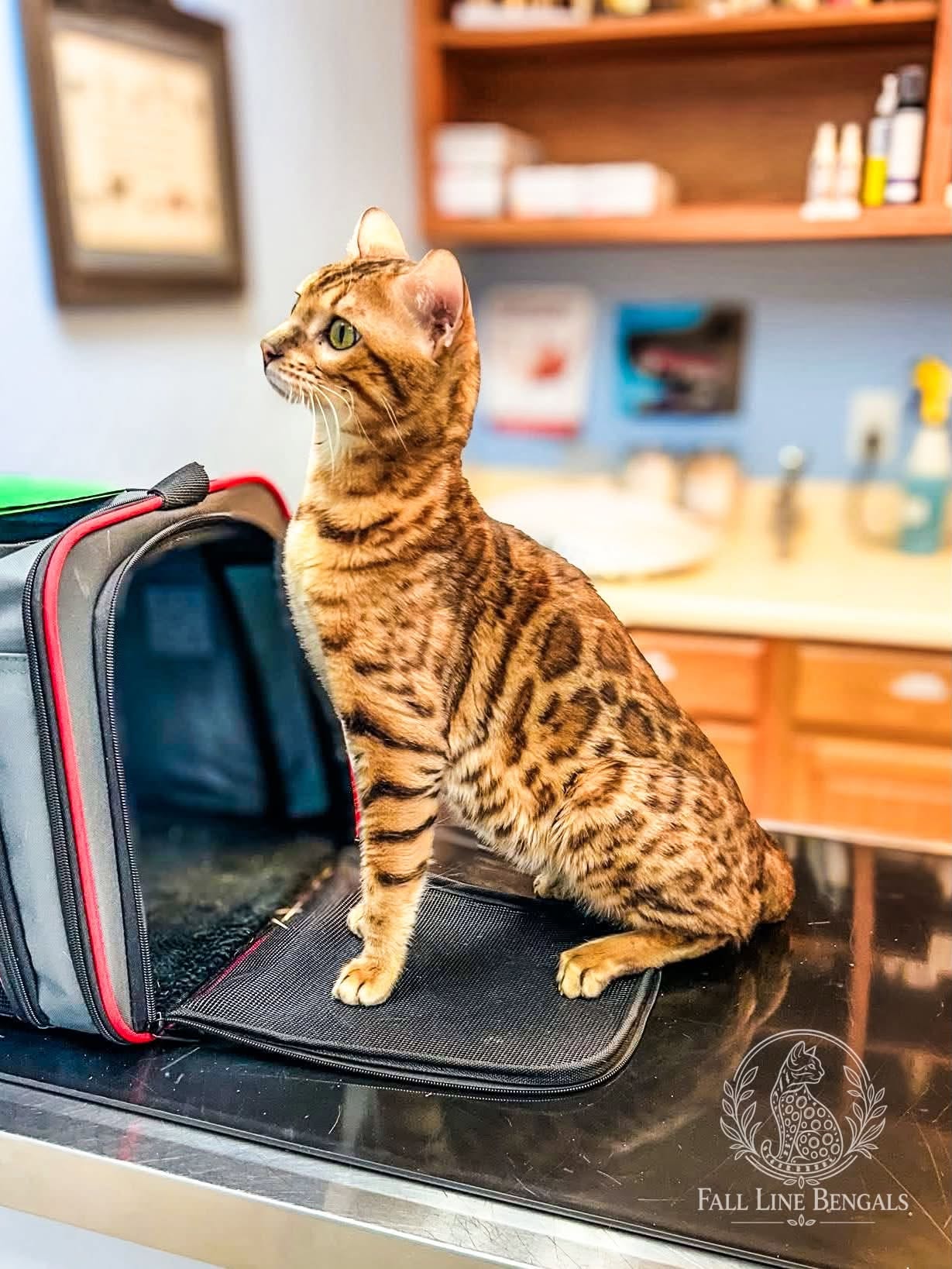
The most prized pattern — two-toned spots arranged in a circular or arrowhead shape, mimicking the rosettes of a leopard or jaguar. High-contrast rosettes on a clear golden ground are the hallmark of a show-quality Bengal.
Spotted
Single-color spots distributed across the body. Spots may be round, oval, or elongated. A well-spotted Bengal has excellent contrast and a random, wild distribution — never aligned like a tabby stripe.
Marbled
A flowing, horizontal swirl pattern derived from the classic tabby but dramatically modified. True marble has a random, non-symmetrical flow with sharp contrast — no two marbled Bengals look alike.
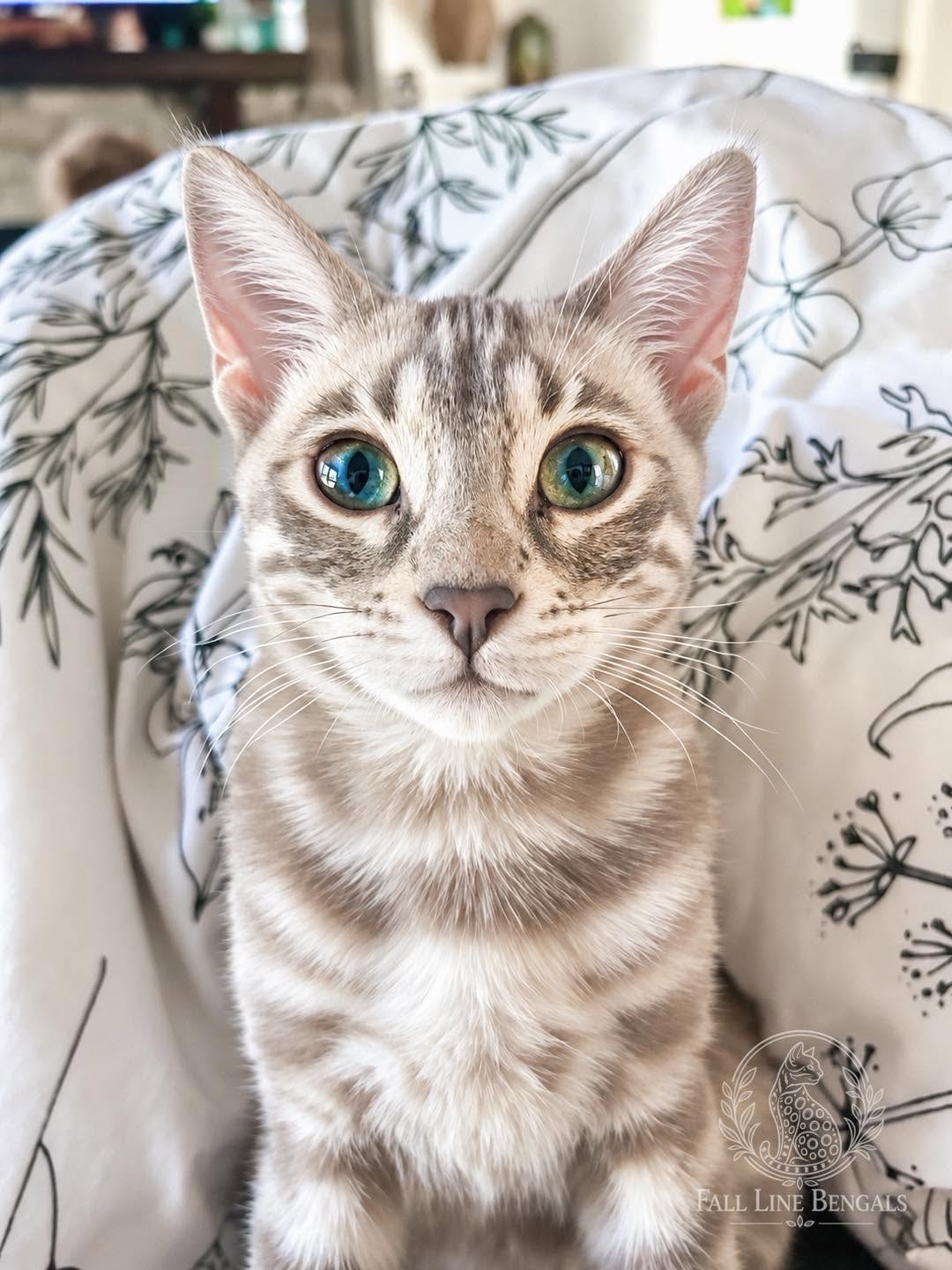
Colors they come in
Is a Bengal Right for You?
What to Expect
Bengals are extraordinary companions — but they thrive in homes that understand their needs. They are not a low-maintenance breed. They want engagement, stimulation, and a family that treats them as a true member of the household.
At Fall Line Bengals, we take the time to match every kitten to the right home. We ask questions, we listen, and we are honest about whether a Bengal is the right fit for your lifestyle.
Health & Longevity
A Robust, Long-Lived Breed
Bengals are generally a healthy, hardy breed with a lifespan of 12–16 years. Hybrid vigor from their wild ancestry contributes to their overall constitution.
Responsible breeders test for known genetic conditions including HCM (hypertrophic cardiomyopathy) and PK-Def (pyruvate kinase deficiency). At Fall Line Bengals, all breeding cats are health tested before any litter is planned.
Ready to Bring One Home?
If the Bengal sounds like the right companion for your life, we would love to talk. Our kittens are raised with intention — and placed with the same care.